Introduction
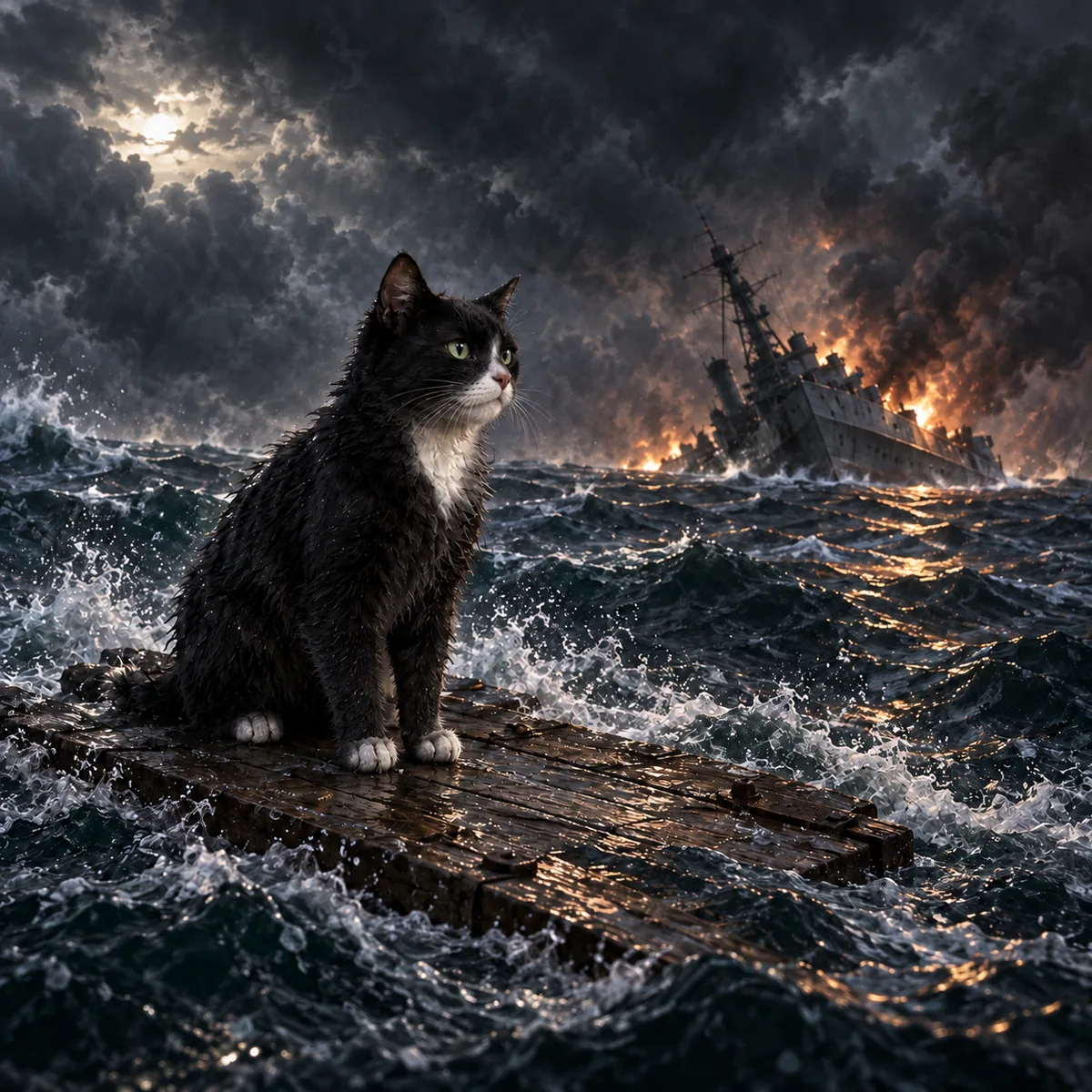
Simon was the ship’s cat aboard HMS Amethyst during the Yangtze Incident of 1949. He survived shellfire that killed and wounded sailors, recovered from injuries, and returned to catching rats while the ship remained trapped on the river. His work protected scarce food, and his presence became part of the crew’s morale.
Unlike Oscar’s disputed three-ship journey, Simon’s service has a contemporary award citation. The PDSA Dickin Medal record identifies the ship, the injury, and his continued rat control. The story still needs context: the sailors and the cat were caught in a civil war they could not control.
Historical Context
China’s civil war was nearing a decisive stage in April 1949. The Royal Navy sent Amethyst up the Yangtze toward Nanjing to relieve a guard ship serving the British embassy. On 20 April, People’s Liberation Army artillery fired on the sloop. The ship grounded and suffered severe casualties. Other Royal Navy vessels also came under fire while trying to help. The Royal Navy’s retrospective places Simon’s story amid those human losses.
For weeks Amethyst could not safely leave. Supplies, sanitation, and morale became everyday concerns. Rats threatened food stores on a damaged ship in a hot river environment; a working ship’s cat had a practical role as well as being a companion.
The Story
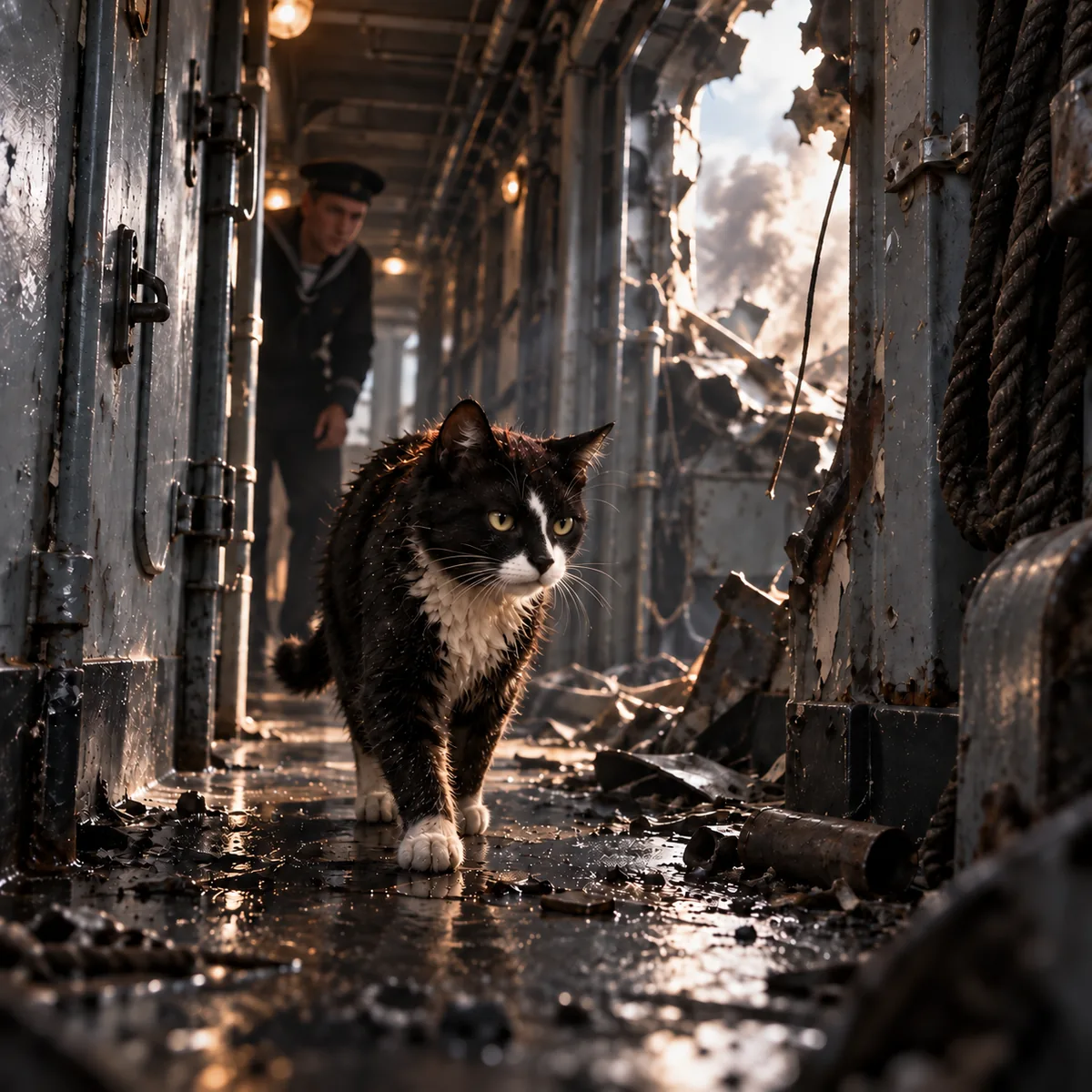
Simon was already aboard Amethyst when the shelling began. The PDSA says he received shrapnel wounds to his legs and burns to his back and face. He recovered and resumed hunting. The Dickin Medal citation praises him for disposing of many rats despite being wounded in the shell blast. It is a concise contemporary recognition of what the crew valued most.
Crew accounts also describe Simon moving among injured sailors and lifting morale. He was nicknamed “Able Seaman Simon,” an affectionate shipboard title. The PDSA tells of a particularly troublesome rat named “Mao Tse-tung”; that colorful detail belongs to shipboard storytelling and should not obscure the well-documented problem of protecting food. Even a very good rat catcher could not alone resolve shortages created by a prolonged armed standoff.
Amethyst finally escaped downriver at the end of July 1949. The ship reached friendly waters and Simon’s fame spread through the press. The PDSA medal was announced that year, making him the only cat to receive the Dickin Medal. That distinction rests on the award record, not simply on a later claim of unusual bravery.
What We Know — and What We Don’t
The 20 April attack, Simon’s wounds, continued rat catching, and 1949 medal are supported by Royal Navy and PDSA accounts. The ship was attacked on 20 April and escaped at the end of July. PDSA’s shorter “almost ten weeks” summary does not fit that chronology; the sources consulted here do not explain the discrepancy. This article uses the dated events rather than repeating the shorter duration.
What Happened Afterward
Simon returned to Britain but died in quarantine on 28 November 1949, before he could receive the medal at a public ceremony. The University of Bristol’s photograph catalogue records his death date and preserves a photograph taken during quarantine. His grave and medal became sites of remembrance for a ship and crew caught in a dangerous diplomatic crisis. The honor also preserved a small practical truth: on a vessel under pressure, guarding food and offering companionship were forms of service.
From History to Song
“Still on Watch” emphasizes recovery and routine duty after an attack. Simon did not end the Yangtze Incident; he returned to a familiar task while the crew waited and worked. The song’s historical angle is resilience beside wounded people, with the rat hunt as a concrete way to show care for a ship’s shared supplies. His tale connects naturally to Oscar’s naval-cat legend, while illustrating how a documented citation changes what a historian can say.
The small scale of the task is the point. Guarding a food store does not sound like a naval battle, but it mattered to people held aboard a damaged ship. The medal citation gives that everyday service its historical weight.
Key Facts
- Animal: Simon
- Species/breed: Domestic cat
- Conflict: Chinese Civil War / Yangtze Incident
- Country/unit: United Kingdom; HMS Amethyst, Royal Navy
- Role: Ship’s cat and rat catcher
- Key date(s): 20 April 1949, shelling; late July 1949, escape; 28 November 1949, death
- Location(s): Yangtze River, China; Britain
- Known for: Continuing rat control after shell-blast injuries
- Recognition/award: PDSA Dickin Medal, 1949; only cat recipient
Sources & Further Reading
- “Simon”, PDSA, Dickin Medal citation and account, 1949.
- “Royal Navy commemorate the Yangtze Incident”, Royal Navy, 9 May 2019.
- “Simon – the ship’s cat on HMS Amethyst during the Yangtse Incident”, University of Bristol, Historical Photographs of China, photograph JC-s145 and catalogue notes.