Introduction
Judy’s Second World War crossed a sinking, captivity, another sinking, and survival alongside prisoners who had little control over their own lives. She was a ship’s dog aboard HMS Grasshopper when Japanese aircraft attacked during the evacuation from Singapore. Later, at a camp on Sumatra, she became closely attached to Leading Aircraftman Frank Williams and was registered with the prisoner number 81A Gloegoer Medan.
Her story should not be reduced to the novelty of a dog with a POW number. The registration mattered because it reportedly helped keep her alive; her companionship mattered because the people around her endured years of hunger, disease, violence, and fear.
Historical Context
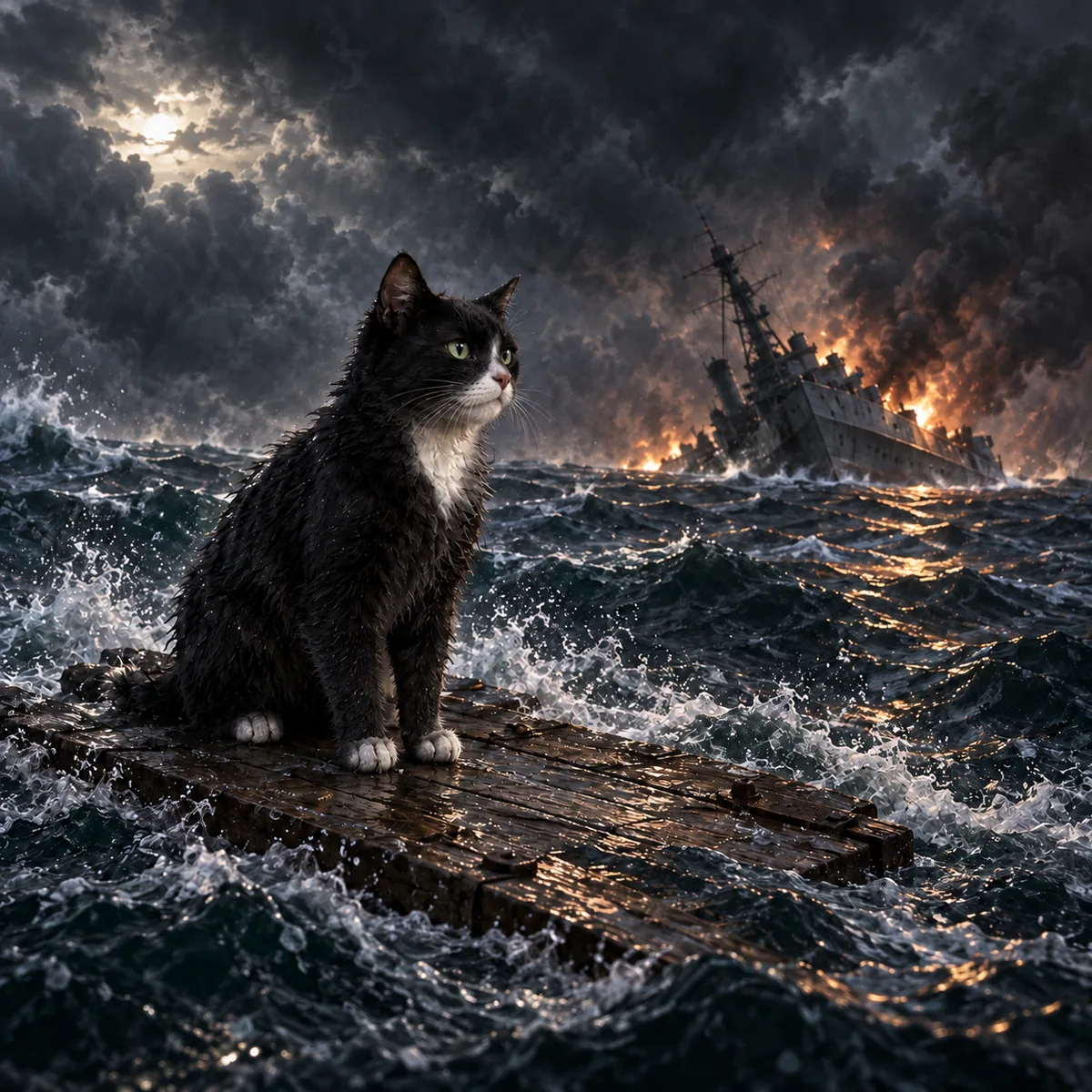
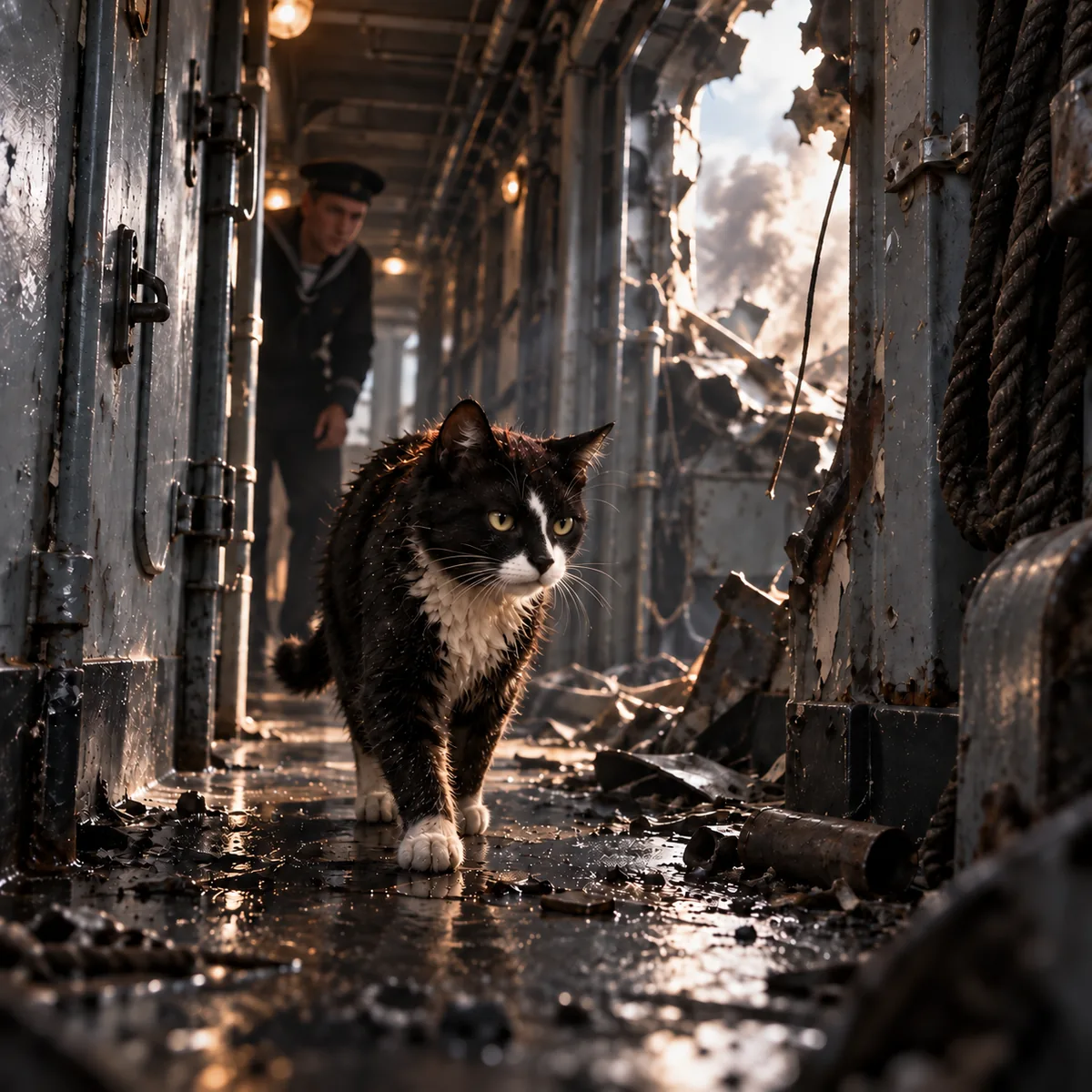
Japan’s rapid advance through Malaya forced British and Allied troops toward Singapore. In February 1942, as the colony faced surrender, ships tried to carry people to safer territory in the Dutch East Indies. Grasshopper, a Royal Navy gunboat, was attacked and sunk on 14 February 1942, a date listed in the crew memorial record. Judy survived with members of the crew. They reached an island but lacked water; later testimony credits Judy with finding a freshwater spring.
The survivors moved onward through islands and jungle, but Japanese forces captured the group on 18 March. The UK National Archives’ account draws on an Air Ministry file and later testimony, offering a careful basis for the chronology.
The Story
Judy had been born in Shanghai in 1936 and first served as a Royal Navy ship mascot aboard HMS Gnat. She transferred to Grasshopper in 1939. After the 1942 sinking, she remained with the stranded sailors. Her discovery of water is recorded in the National Archives’ account and in survivor testimony published by the UK Ministry of Defence.
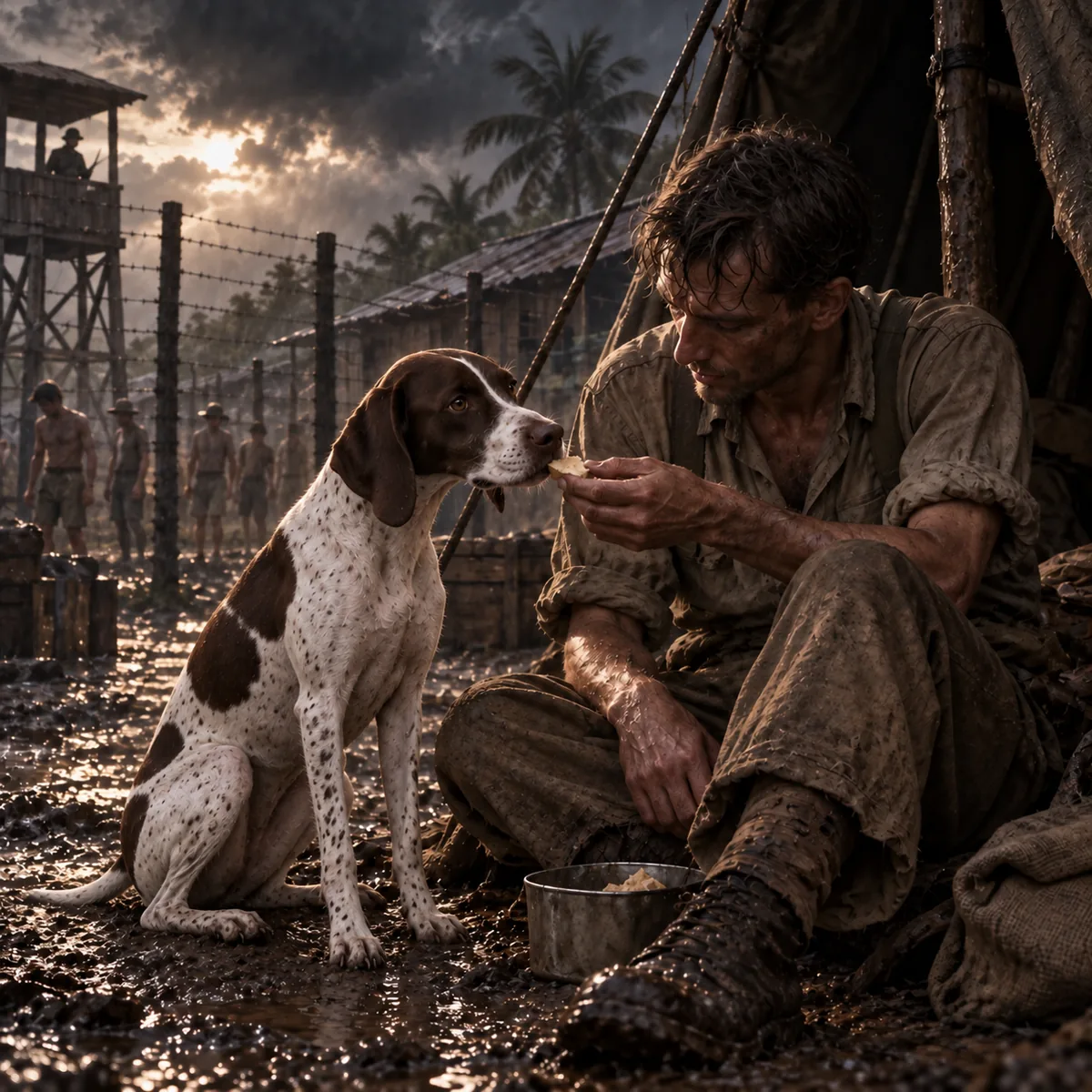
At Gloegoer camp near Medan, Judy met Frank Williams by August 1942. He shared food with her and argued for her protection. The National Archives says Japanese guards eventually registered Judy as a prisoner of war under the number 81A Gloegoer Medan; it does not establish an exact registration day. This status meant she could receive a ration and gave Williams an argument against guards who threatened her. Their bond became part of the prisoners’ daily life.
In June 1944 Judy and Williams were placed aboard the crowded transport Harugiku Maru, formerly Van Waerwijck. These are two names for the same ship, as the Australian War Memorial’s account of POW transports confirms. It was torpedoed on 26 June 1944. Judy had been smuggled aboard and survived the sinking. The National Archives describes Williams pushing her through a porthole and Judy trying to help people in the water. After separation, they found each other again in captivity. Judy remained with Williams until Japan’s surrender in 1945.
What We Know — and What We Don’t
The National Archives reports Judy’s POW number and preserves her Dickin Medal confirmation in AIR 2/5036. The award file should not be confused with an original Japanese prisoner register; the exact registration date is not established here. Some institutional retellings contain errors: PDSA describes the transport’s loss as an air strike, whereas the National Archives, Ministry of Defence and Australian War Memorial identify torpedoing. The transport’s Dutch and Japanese names refer to the same vessel. Stories of crocodile or alligator wounds, attacks by wild dogs, and individual rescues may come from survivor memories, but their particulars should not be used to manufacture a precise sequence without a linked record.
What Happened Afterward
Williams brought Judy to Britain after the war. She received the PDSA Dickin Medal on 2 May 1946 for her endurance and contribution to prisoners’ morale; the confirmation survives in the National Archives. Williams later took her to East Africa. Judy died in Tanganyika, now part of Tanzania, on 17 February 1950. Her medal eventually entered the Imperial War Museums collection, preserving a connection between the famous animal and the people whose captivity she shared.
From History to Song
“Prisoner 81A” focuses on a number assigned inside a system built for confinement. The song’s emotional center is the reciprocal care between Judy and Williams: he fed and protected her, and prisoners remembered her watchfulness and companionship. The history follows their separation and reunion while keeping the individual rescue stories attributed to those who remembered them.
The number also connects the public animal story to a specific camp and a surviving award file. That anchor matters: Judy's years of captivity involved many people, not just one dog and one man, and her fame should lead readers back to them.
Key Facts
- Animal: Judy
- Species/breed: Liver-and-white English pointer
- Conflict: Second World War
- Country/unit: United Kingdom; HMS Gnat, HMS Grasshopper; later Japanese POW camps
- Role: Ship mascot and prisoner companion
- Key date(s): 14 February 1942, Grasshopper sinking; 18 March 1942, capture; 2 May 1946, Dickin Medal; 17 February 1950, death
- Location(s): Shanghai; Singapore evacuation route; Sumatra; Britain; Tanganyika (now Tanzania)
- Known for: Registration as POW 81A Gloegoer Medan
- Recognition/award: PDSA Dickin Medal, 1946
Sources & Further Reading
- “70th anniversary of the sinking of the Rakuyō Maru”, Australian War Memorial, 2014; includes the date and alternative name of Harugiku Maru.
- “Judy, the only dog registered as a prisoner of war”, UK National Archives, collection story drawing on AIR 2/5036; date not stated.
- “Judy”, PDSA, Dickin Medal account, 1946 citation and later history.
- “Judy: The Dog who became a prisoner of war”, UK Government, 2015.
- “HMS Grasshopper”, Roll of Honour, crew-loss record citing Commonwealth War Graves Commission data; date not stated.