
Introduction
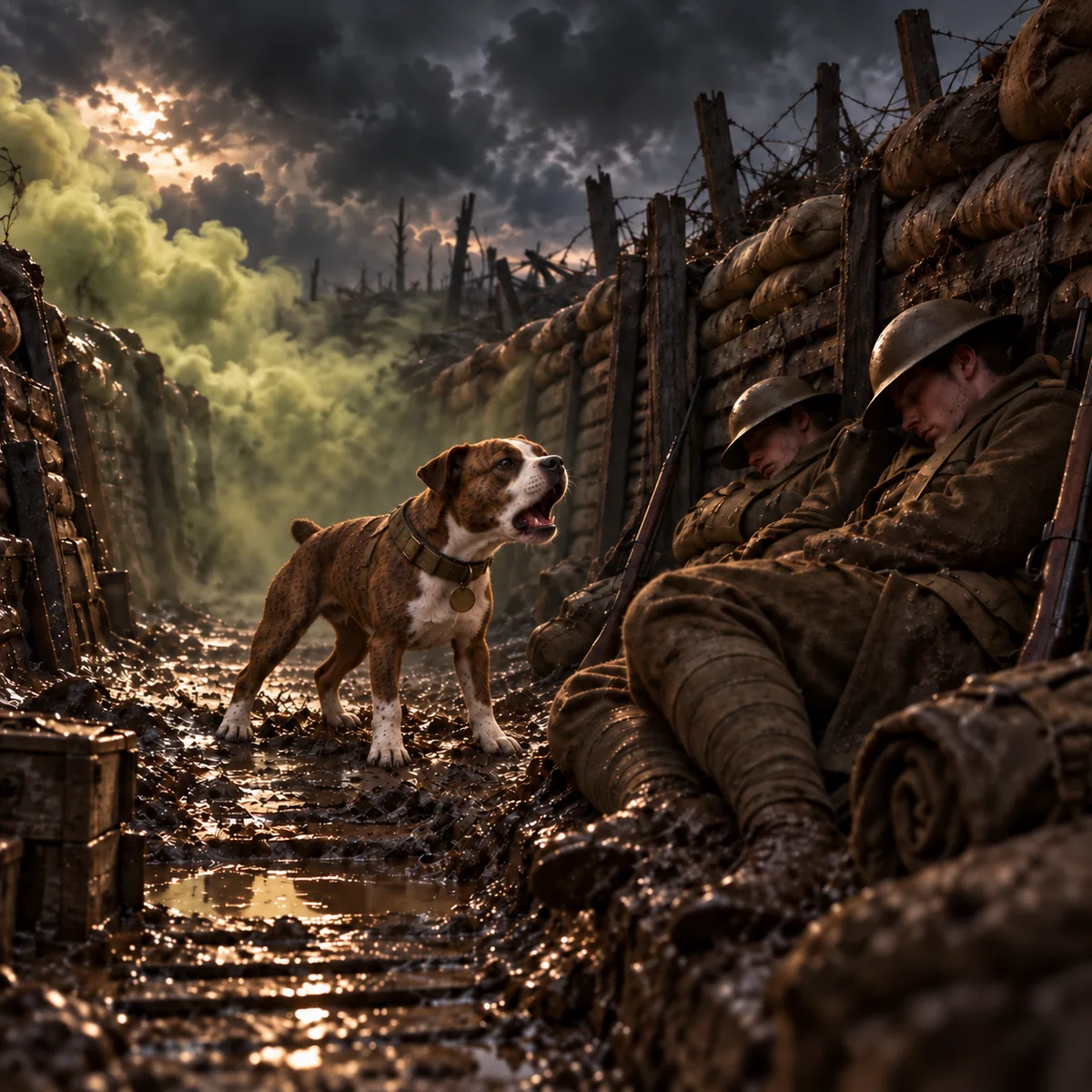
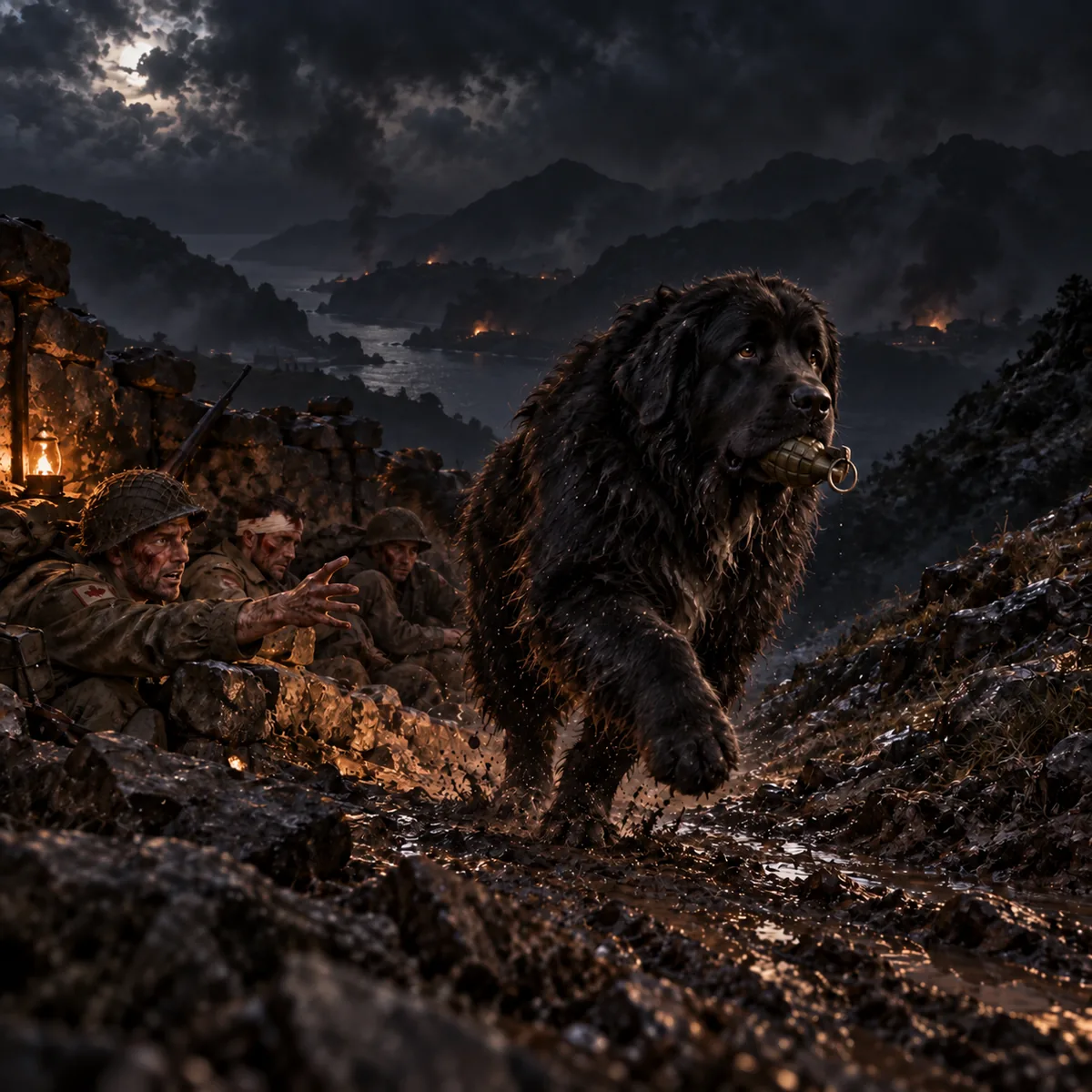
Chips went ashore in Sicily with American soldiers on 10 July 1943. A sentry dog trained to warn and guard, he became famous for a very different action: breaking toward an enemy machine-gun position and helping force its occupants to surrender. The event was reported by men who served with him, but later accounts added details that do not all have the same evidentiary weight.
His story is also about the Army’s uncertain way of recognizing animals. Medals were given, challenged, and withdrawn; decades later another institution honored him. The recognition history should not obscure what a frightened landing force faced that morning.
Historical Context
Operation Husky, the Allied invasion of Sicily, began on 10 July 1943. Landing units had to move from exposed beaches into defended terrain. Chips served with the U.S. 3rd Infantry Division and was attached to the 30th Infantry Regiment during the Sicily action. The Army Historical Foundation describes the larger war-dog program: privately owned dogs were donated, trained, and attached to units for useful but dangerous work.
Chips belonged to the Wren family of Pleasantville, New York, before his wartime donation. He was trained in 1942 and later served in several theaters with the division. His assigned role was sentry work, which makes the Sicily episode unusual rather than a routine trained attack.
The Story
On the landing day, a hidden enemy machine gun threatened the men near Chips. The Army Historical Foundation says Chips broke away from his handler, ran at a camouflaged bunker, seized one man, and prompted the crew’s surrender. The PDSA preserves handler Private John Rowell’s later account: firing and noise came from a hut; then a soldier emerged with Chips gripping him, and three more men followed. Chips suffered a scalp wound and powder burns.
This is a stronger claim than a generic “hero dog” anecdote because it is tied to a particular unit, place, date, handler account, and contemporary award recommendation. It is still best to write “soldiers reported” when describing the exact seconds inside the position: no human witness in these sources saw every movement there. Some retellings say Chips pulled the machine gun from its mount. The PDSA repeats that detail, but its own quoted eyewitness account does not establish it; the article does not rely on it.
According to PDSA, the division recommended Chips for the Distinguished Service Cross. He was given a Silver Star and Purple Heart for his actions, but those military decorations were later revoked because regulations did not provide for animal recipients. The Army’s account of Chips and PDSA’s award history both explain the reversal.
What We Know — and What We Don’t
The core episode—Chips breaking toward a defended machine-gun position and contributing to the surrender of its crew—is supported by Army institutional history and award material. The precise construction of the position varies between “pillbox,” “hut,” and “machine-gun nest.” Those terms should not be made into three separate sites. Later dramatic additions, including exact actions inside the structure or claims that he deliberately disabled the weapon, go beyond the clearest eyewitness description.
What Happened Afterward
Chips continued serving and returned to the Wren family after the war. His revoked wartime medals remained part of the story of animal service rather than a current official award. In January 2018, the PDSA awarded him a posthumous Dickin Medal. The 3rd Infantry Division Museum has also displayed the medal and kept his service visible to later soldiers.
From History to Song
“Into the Fire” emphasizes the moment a sentry dog moved ahead of the people around him and changed a dangerous encounter. The song can honor that courage without pretending Chips followed a human tactical plan or that every cinematic detail can be documented. His story also asks why an animal’s recognized service was later removed from an awards ledger, and why the men who returned with him remembered it anyway.
The later Dickin Medal gives the episode a second historical setting: the long afterlife of wartime recognition. A listening experience can hold the beach action and the soldiers' memories together without making the revoked military medals sound current.
Key Facts
- Animal: Chips
- Species/breed: Mixed-breed dog
- Conflict: Second World War
- Country/unit: United States; 3rd Infantry Division, attached to the 30th Infantry Regiment at Sicily
- Role: Trained sentry dog
- Key date(s): 10 July 1943
- Location(s): Sicily, Italy
- Known for: Reported assault on a machine-gun position and surrender of its crew
- Recognition/award: Wartime Silver Star and Purple Heart revoked; posthumous PDSA Dickin Medal, 2018
Sources & Further Reading
- “The Dogs of War: The U.S. Army’s Use of Canines in WWII”, Army Historical Foundation, Seth Paltzer, historical essay.
- “Top honour for WWII hero dog”, PDSA, 11 January 2018.
- “The Dog Hero of the 3rd Infantry Division”, U.S. Army, 2022.